


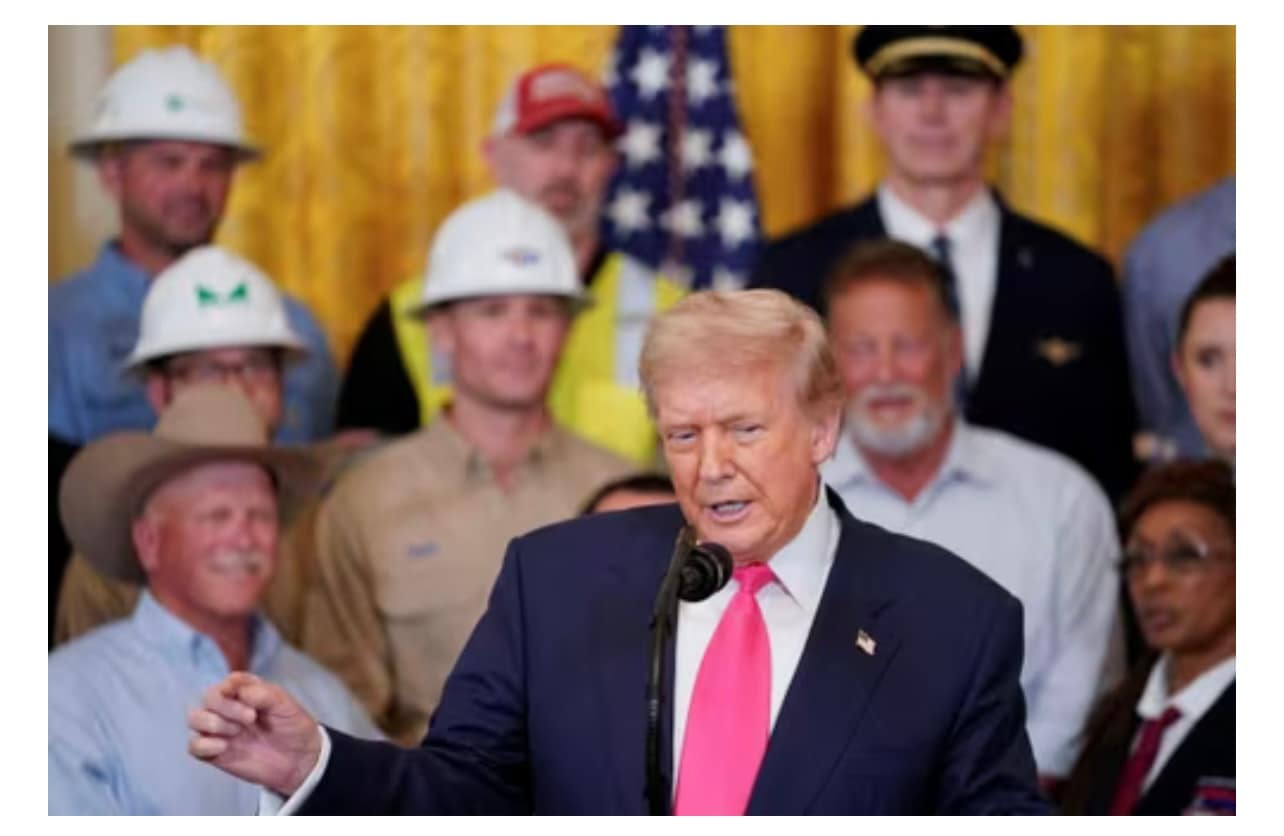
On June 26, former U.S. President Donald Trump announced that a framework agreement marking a trade truce between the United States and China has been officially signed. The announcement follows prior negotiations in Geneva and London aimed at de-escalating long-standing trade tensions.
“We signed a deal with China yesterday,” Trump stated during a press briefing, though he did not disclose specific details of the agreement.
According to a White House official, the document formalizes commitments made in Geneva this past May. These include significant tariff reductions for a 90-day period to create space for a broader trade agreement. Under the Geneva framework, average U.S. tariffs on Chinese goods are to be cut from 145% to 30%, while China’s tariffs will drop from 125% to 10%.
U.S. Commerce Secretary Howard Lutnick confirmed the signing took place around June 24–25. A key element of the deal involves China agreeing to supply critical rare earth minerals—used in wind turbines and aerospace components—while the U.S. pledges to lift some retaliatory tariffs in return.
The framework was initially set in motion through a trade consultation mechanism established in Geneva. It was later advanced in London, where both sides agreed in principle, awaiting final approval from top leadership. Temporarily, both nations have agreed to cap reciprocal tariffs at 10% during the 90-day negotiation window. If talks collapse, higher tariffs—up to 50%—could resume as early as August or September.
Sean Stein, Chairman of the U.S.–China Business Council, called the agreement a “major breakthrough” that, if followed through, could offer more predictability, fairness, and transparency in bilateral trade. However, the Chinese government has not issued any official comment. When approached, the Chinese embassy in Washington said it had “no information to share.”
Despite the agreement, the U.S. will maintain a 20% tariff on most Chinese goods, citing China’s failure to curb the export of fentanyl precursors into the United States as a key concern.
This agreement arrives just ahead of the July 9 deadline, when the temporary tariff relief would have expired. While a bilateral trade deal with the United Kingdom has already been signed, the U.S. is currently in talks with at least 10 other partners, including India.